early in the story
Calling the goats
At seven years old, the wild boy Duny overhears his aunt, the village witch, chanting a rhyme to call a goat down from a thatched roof. He repeats the words without understanding them, and the goats of the high pastures come to him in a silent, pressing crowd. The boy is frightened by their strange obedience and runs weeping into the village, surrounded by the herd. His aunt recognizes the accidental working of power and takes him into her hut, where she begins to teach him the rudiments of sorcery. This moment marks the first step on the path that will lead him to become the greatest wizard of Earthsea, though it also sets him on a course toward pride and a terrible mistake.
when Ged is twelve years old
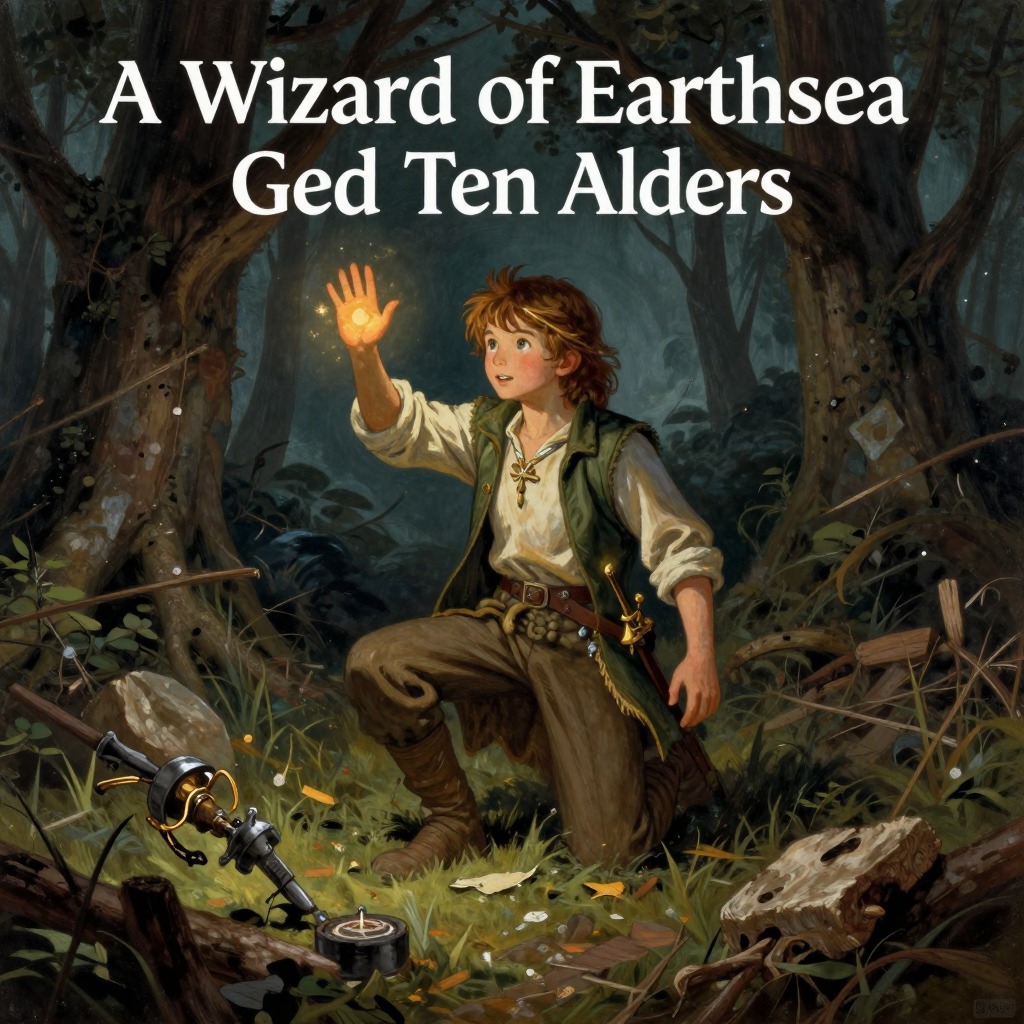
Kargish Raid on Ten Alders
The Kargad Empire, a fierce white-skinned people, invades Gont. After burning East Port, a band of a hundred Kargish warriors marches up the Northward Vale toward the village of Ten Alders. The villagers, only eighteen men and boys, prepare to fight with hastily forged spears. Duny, exhausted from working the bellows all night, realizes he cannot fight physically. As a thick morning fog begins to thin, he sees a chance to use a weatherworker's charm he learned from a wandering sorcerer. He weaves the fogweaving spell together with a concealment charm, creating a dense, magical mist that hides the village and confuses the invaders.
immediately after the Kargish raid begins
Fog-weaving at Ten Alders
Duny, having hidden the village in a thick fog, directs the villagers to lead the Kargish warriors toward the High Fall cliff. The invaders, unable to see, chase phantom shapes through the mist. Several Kargs fall to their deaths over the cliff, and others are killed by the villagers in the confusion. The remaining Kargs flee in terror down the mountain, where they are later harried and killed by forces from the East Forest. The battle is won, but Duny collapses, having overspent his power. He lies speechless and feverish for five days, his life hanging in the balance. This event reveals the immense power within him, but also the danger of using it without proper knowledge.
shortly after the Kargish raid
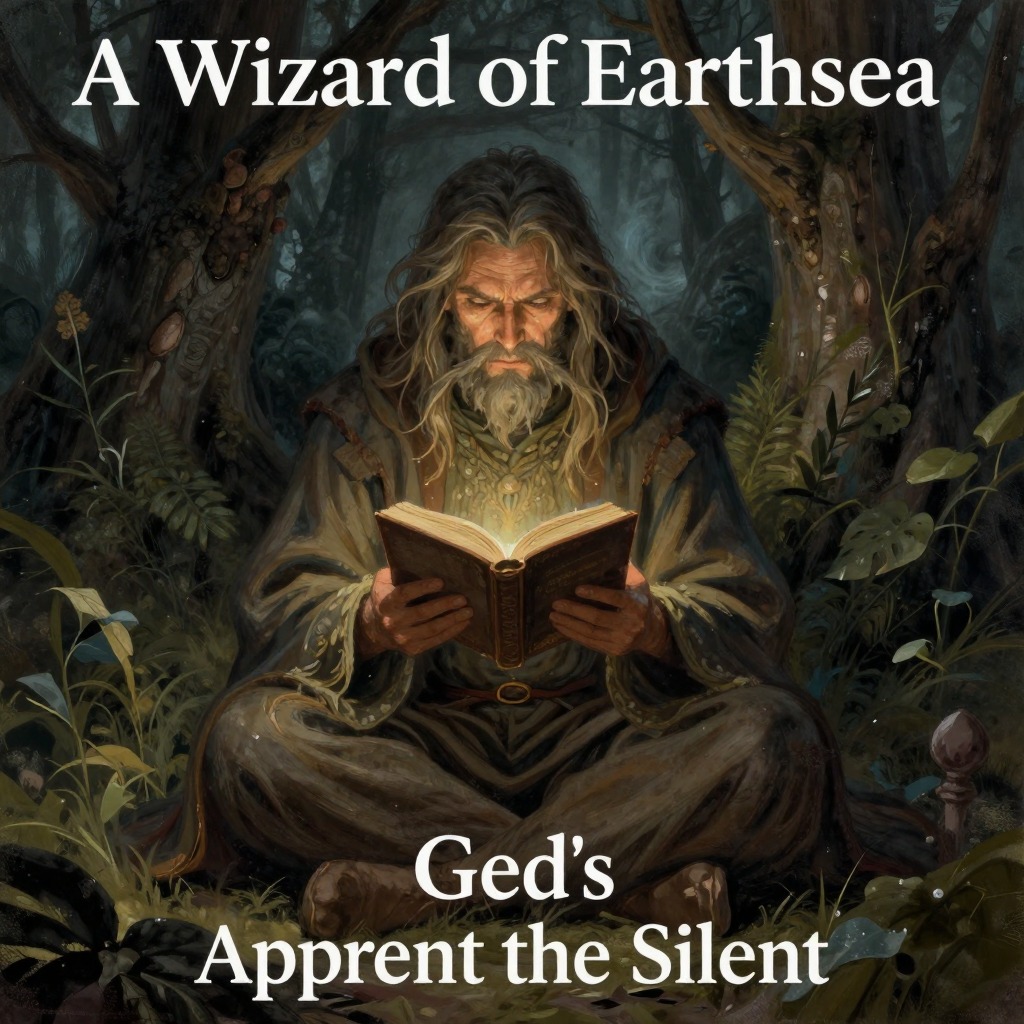
Naming by Ogion
The mage Ogion the Silent, hearing of the boy's deed, comes to Ten Alders. He heals Duny with a touch and offers to take him as a prentice. On the day of his Passage into manhood, Duny walks naked into the cold springs of the River Ar. Ogion, waiting on the far bank, whispers to him his true name: Ged. This ceremony marks the end of his childhood and the beginning of his formal training in wizardry. After the naming feast, Ogion tells Ged to bid his people farewell, and they leave the village together, setting off into the steep forests of Gont Mountain.
after leaving Ten Alders
Wandering with Ogion
Ged expects to immediately learn powerful magic, but Ogion teaches him patience and silence. They wander through the villages and forests of Gont, and Ogion refuses to use spells for trivial purposes, even letting rain fall on them. He teaches Ged to observe the natural world, to know the fourfoil plant in all its seasons before learning its true name. Ged grows frustrated, feeling he is learning nothing. Ogion's lesson is that mastery requires patience and that true power comes from understanding, not from the mere performance of spells. This period of quiet apprenticeship is a stark contrast to the dramatic events that will follow.
spring, during Ged's apprenticeship with Ogion
Meeting the girl Serret
While gathering herbs in a meadow near Re Albi, Ged meets a tall, sallow girl, the daughter of the Lord of Re Albi. She questions him about sorcery, mocking his abilities and goading him into boasting. She asks if he can summon spirits of the dead or perform Changing spells. Ged, stung by her mockery, claims he can do these things. She challenges him to prove it, and he resolves to do so. This encounter plants the seed of pride and recklessness that will lead to disaster. The girl is later revealed to be Serret, a half-witch who serves dark powers.
the day after meeting Serret
Reading the summoning spell
Determined to prove himself to the girl, Ged returns to Ogion's house while the mage is out. He takes down the ancient Lore-Books, which Ogion has never opened in his presence. He searches for a spell of self-transformation but instead finds a spell for summoning the spirits of the dead. As he reads it, a horror comes over him. He looks up to find the room dark and sees a shapeless clot of shadow crouching by the door, reaching out to him. Ogion returns, his staff blazing with white light, and dispels the darkness. He scolds Ged for his foolishness and warns him of the dangers of sorcery, but Ged's pride is wounded.
after the incident with the summoning spell
Choosing Roke
Ogion gives Ged a choice: stay with him and learn slowly, or go to the School for Wizards on Roke Island. Ged, yearning for glory and quick power, chooses Roke. Ogion arranges passage for him on a ship called the Shadow. Before parting, Ogion warns Ged not to try any tricks with the sea. Ged boards the ship, feeling forlorn as he watches his master walk away. This decision sets Ged on a path of formal education but also away from the wisdom of silence and patience that Ogion embodies.
after leaving Gont
Voyage to Roke
Ged sails from Gont on the ship Shadow. He experiences the sea for the first time and learns the work of a crewman. The ship passes Havnor and other islands of the Archipelago. A great storm arises, and the ship is blown off course. The master asks Ged to abate the wind, but he cannot. Ged sees a light to the west and insists it is Roke Island. The master, desperate, follows his direction. They row through the storm and emerge into a calm, clear sky, arriving at Thwil Bay on Roke. This event demonstrates Ged's innate power and his ability to sense the truth, even when he lacks the skill to control it.
upon arriving at Roke
Entry to Roke
Ged goes to the Great House of Roke and knocks on a small door. The Doorkeeper tells him to enter if he can, but Ged finds himself unable to pass through the doorway. He tries an Opening spell, but it fails. Finally, the Doorkeeper tells him to say his name. Ged, understanding the gravity of the act, speaks his true name aloud for the first time. He is then able to enter. The door is revealed to be made of a dragon's tooth and horn. This event establishes the importance of names and the power of truth in the world of Earthsea.
immediately after entering Roke
Meeting the Archmage
Ged is led to an open court where he meets the Archmage Nemmerle, an ancient, white-clad figure. As their eyes meet, Ged briefly understands the language of the bird, the water, and the wind, feeling himself to be a word spoken by sunlight. He gives Nemmerle Ogion's letter, which says Ged will be the greatest wizard of Gont. Nemmerle speaks in a strange tongue and a raven of Osskil pecks at his staff. The encounter is mysterious and profound, hinting at the great destiny and the great dangers that await Ged. Nemmerle's raven speaks a phrase in Osskilian, which Ged does not understand.
early in Ged's time at Roke
Rivalry with Jasper
Ged is assigned a guide, a tall, graceful youth named Jasper. Jasper's polite but condescending manner immediately irritates Ged. On Roke Knoll, Jasper challenges Ged to perform an illusion, but Ged, knowing only village witchery, refuses. Jasper performs a trick, making a spring appear, and Vetch, another student, creates a creature from earth. Ged feels humiliated and swears to prove his power. This rivalry becomes a central conflict, driving Ged's pride and leading him to make a terrible mistake. Jasper's mockery is a constant goad to Ged's ambition.
early in Ged's time at Roke
Friendship with Vetch
After the humiliation on Roke Knoll, Vetch comes to Ged's cell. He talks about his home in the East Reach and draws maps on the floor with a finger that leaves silver lines. Vetch offers Ged a sure and open friendship, which Ged cannot help but return. This friendship becomes the most important relationship in Ged's life, a source of loyalty and support through all his trials. Vetch's kindness and wisdom are a counterbalance to Ged's pride and Jasper's scorn.
Ged's first year at Roke
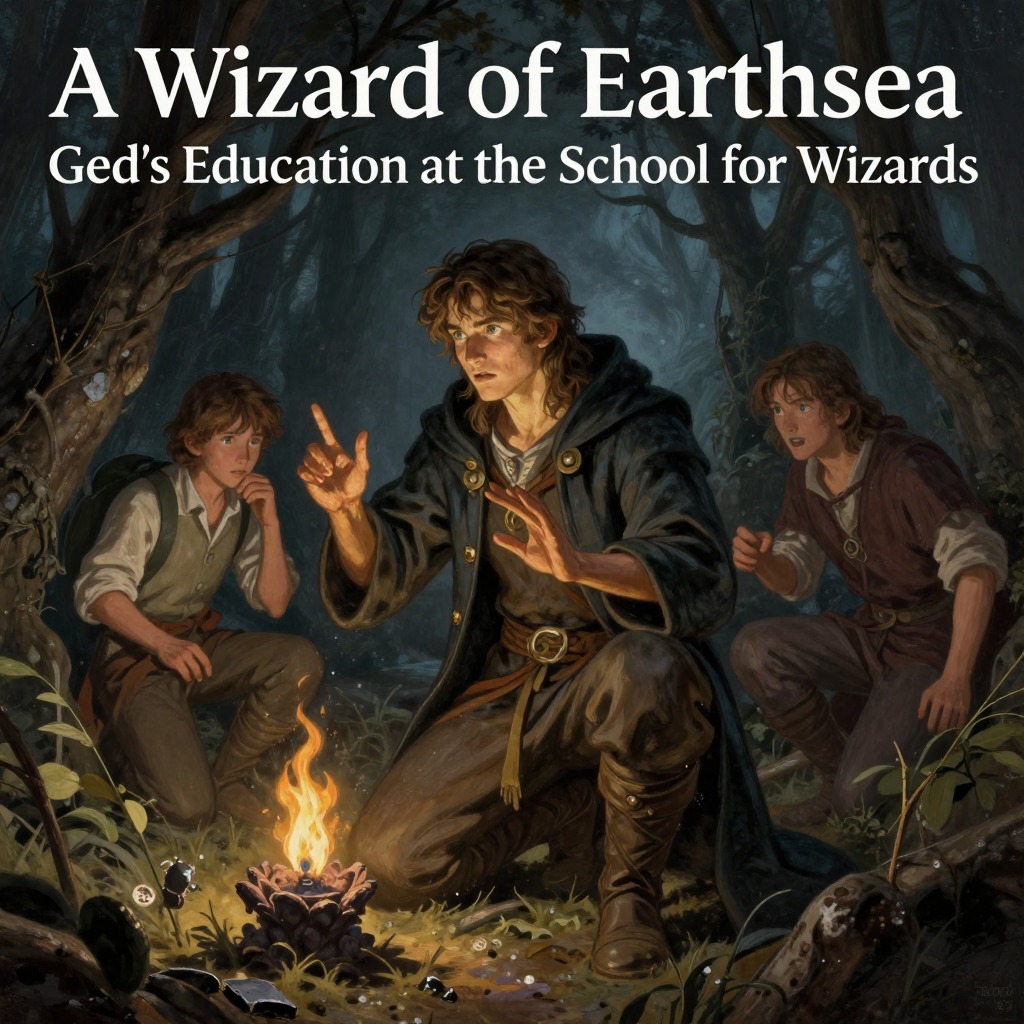
Learning at Roke
Ged studies with the various Masters of Roke: the Master Chanter, the Master Windkey, the Master Herbal, and the Master Hand. He excels at all the arts of illusion and weatherworking, quickly surpassing students who have been there longer. He asks the Master Hand about making a permanent change, but the Master warns him about the Equilibrium and the danger of changing the world. Ged is dissatisfied with this answer, believing a powerful wizard should be able to do as he pleases. This impatience and desire for power over wisdom is a recurring flaw.
Ged's second year at Roke
Study at the Isolate Tower
Ged is sent to the Isolate Tower to study with the Master Namer, Kurremkarmerruk. He learns the true names of places, things, and beings, understanding that magic consists in the true naming of a thing. The Master teaches that a mage can only control what he can name exactly and wholly, and that this sets the limits of his power. Ged works hard and learns quickly, but the Master gives him only a grudging 'good beginning.' This year of intense study deepens his understanding of the fundamental principles of magic.
after leaving the Isolate Tower
Finding the otak
Walking south across Roke, Ged takes shelter from rain under a tree. In the morning, he finds a small, fierce creature, an otak, curled up asleep in his cloak. He calls it by its true name, Hoeg, and it chooses to stay with him, riding on his shoulder. The otak becomes his constant companion, a silent, loyal friend. It is a rare and wild beast, and its attachment to Ged is seen as a sign of his connection to the Old Powers of the earth. The otak will later play a crucial role in saving Ged's life.
Sunreturn, after Ged's return from the Isolate Tower
Winter Festival at Roke
Ged returns to the Great House for the Sunreturn festival. He is happy to see Vetch again. The Lady of O, a beautiful woman, is a guest. Jasper performs an elaborate illusion for her, creating a Year-Tree with golden apples. The Lady praises him, and Ged is consumed with bitter envy. He tells himself he could have done better. This moment of jealousy reignites his rivalry with Jasper and sets the stage for the disastrous challenge that will follow. The festival is a time of joy for others, but for Ged it is a dark turning point.
spring, after the Winter Festival
Learning the Great Spells
Ged studies with the Master Changer and the Master Summoner. The Master Changer, impressed by his quickness, begins to teach him the true Spells of Shaping, giving him the Book of Shaping to study. This is done without the Archmage's knowledge and is unwise. The Master Summoner teaches him to summon real powers like light and heat, warning that using such spells can unbalance the world. Ged is uneasy with some of the summoning spells, which remind him of the shadow he saw in Ogion's house. He pushes these fears aside, believing that more knowledge will make him fearless.
summer, during Ged's second year at Roke
The Long Dance
The school celebrates the Moon's Night and the Long Dance, a festival that occurs once every fifty-two years. The island is filled with music, dancing, and magic. After the dance, a group of students, including Ged, Vetch, and Jasper, hold a private feast in a courtyard. They play with illusions, and Ged is in a wild, fey mood. The rivalry between Ged and Jasper comes to a head when Jasper makes a cutting remark. Ged challenges Jasper to a duel in sorcery, which is forbidden on Roke. Vetch tries to stop them, but the challenge is made.
immediately after the Long Dance
Challenge to Jasper
Ged and Jasper's argument escalates. Jasper taunts Ged, calling him a goatherd and a prentice who doesn't know the First Change. In response, Ged transforms himself into a great falcon for an instant, proving he knows true change, not just illusion. Jasper is shaken but still scornful. He goads Ged into a contest on Roke Knoll, suggesting he summon a spirit from the dead. Ged, driven by pride and rage, accepts the challenge. Vetch tries to intervene, but Ged is beyond reason. He strides off toward Roke Knoll, and the others follow, curious and afraid.
night of the Long Dance
Summoning of Elfarran
On Roke Knoll, Ged begins the Spell of Summoning. He intends to call the spirit of the legendary lady Elfarran. As he speaks the words, the wind rises and the air grows dark. He cries her name three times, and a pale oval of light appears between his arms, showing a beautiful, sorrowful woman. But then the oval widens into a terrible brightness, a rent in the fabric of the world. Through this breach, a hideous, shapeless shadow-beast leaps out and attacks Ged, clawing at his face and throat. The summoning has gone horribly wrong.
immediately after the shadow attacks
Nemmerle's rescue
The other boys flee in terror. Vetch tries to pull the shadow off Ged but is frozen in place. The Archmage Nemmerle appears, his staff glowing with silver light. He touches Ged with his staff, driving the shadow away. The night is healed, and the balance of light and dark is restored. But Nemmerle has spent all his power to save Ged. He is left dying. The shadow has escaped into the world. Ged is carried away, horribly wounded. The event is a catastrophe: a young wizard's pride has loosed an evil force, and the greatest mage of the age has given his life to contain it.
the day after the summoning
Death of Archmage Nemmerle
Nemmerle lies dying in the fountain court, his life force spent. The Masters of Roke keep vigil. His raven of Osskil flies away, a sign that he is passing. The iron bells of the Chanter's Tower toll his death. The Nine Masters gather in the Immanent Grove to choose a new Archmage. They select Gensher of Way. A ship is sent to bring him to Roke. Ged, meanwhile, lies blind and feverish in the healing-chambers, unaware of the world. The death of Nemmerle is a profound loss for Roke and a direct consequence of Ged's folly.
the following months
Ged's recovery
Ged lies ill for four weeks, blind, deaf, and mute. The Master Herbal tends his wounds, which are deep and evil. The shadow's touch has left him scarred and weakened. When he finally recovers enough to see daylight, he weeps. He is slow to speak and his hands falter at magic. He is a shadow of his former self. The other students avoid him, and he isolates himself in shame. He is no longer the brilliant, arrogant boy; he is a broken young man haunted by his mistake.
spring, after Ged's recovery
Meeting with Archmage Gensher
Ged is brought before the new Archmage, Gensher, to offer his fealty. Gensher refuses to accept it, saying he does not know what Ged is. He tells Ged that the shadow he loosed is a nameless power of unlife, and that it will hunt him. He says Ged must stay on Roke, protected by the island's defenses, until he gains the strength to face it. Ged is devastated, feeling that he should have died. Gensher tells him to continue his training and do his work well. This meeting confirms Ged's worst fears: he is bound to a terrible enemy and cannot escape.
autumn, before Ged leaves for the Isolate Tower
Vetch's farewell
Vetch, now a wizard, comes to say goodbye to Ged before leaving Roke. He returns the otak, Hoeg, to Ged. Vetch tells Ged his true name, Estarriol, a gift of ultimate trust. In return, Ged tells Vetch his own true name. This act of friendship restores some of Ged's faith in himself. Vetch encourages him, saying he sees far seas and the fire of dragons in Ged's future. After Vetch leaves, Ged feels a sense of peace and remembers his own naming ceremony. He is seventeen years old and feels a sense of wholeness for the first time since the disaster.
spring, five years after Ged first came to Roke
Learning the Doorkeeper's name
Ged, now a sorcerer, returns to the Great House. The Doorkeeper meets him and tells him he can win his freedom by saying the Doorkeeper's name. Ged tries various magical means to discover it, but all fail. Finally, he admits he cannot take or trick the name from the Master. He asks the Doorkeeper to tell him his name. The Doorkeeper smiles and does so. Ged, having learned the name, is allowed to enter the Great House for the last time. This event symbolizes Ged's growth in wisdom: he has learned that true mastery sometimes comes from humility, not force.
after learning the Doorkeeper's name
Becoming a wizard
Ged is made a wizard and receives his staff, a yew-wood staff shod with bronze. He is given a heavy dark-blue cloak, a gift from the township of Low Torning, where he is to serve as their wizard. The Doorkeeper bids him farewell, opening the back door of the Great House for him. Ged walks down to a ship waiting for him on the bright water. He is now a full wizard, but he is also a hunted man, carrying the burden of the shadow he loosed. His first assignment is to protect a remote township from the threat of dragons.
after becoming the wizard of Low Torning
Life in Low Torning
Ged takes up residence in a small house on a hill in the Ninety Isles. He serves the people as a healer and weatherworker, but they are in awe of him and keep their distance. He finds a friend in Pechvarry, a boatmaker. Ged learns to sail and works with Pechvarry, laying binding-spells on his boats. He spends his days studying his Lore-Books and watching the western sky for the dragons of Pendor. This period of quiet life is a respite, but it is overshadowed by the constant threat of the shadow and the dragons.
late autumn, during Ged's time in Low Torning
Healing attempt on Ioeth
Pechvarry's young son, Ioeth, falls ill with the red-fever. Ged is called to save him. The child is dying, and Ged, unable to bear his friends' grief, attempts a desperate healing. He sends his spirit out after the child's spirit, pursuing it into the dark land of the dead. He calls the boy's name and sees him running down a dark slope under strange stars. Ged follows too far and finds himself on the boundary between life and death. There, the shadow is waiting for him. It has found him at last.
during the healing attempt
Boundary encounter with the shadow
On the dark hillside of the land of the dead, Ged sees the shadow standing across the low stone wall that separates the living from the dead. It is shapeless and whispers at him. He must either go down into the desert lands of the dead or step back into life, where the shadow waits. Ged raises his spirit-staff, which blazes with white fire, and leaps at the shadow. He falls, and wakes in the living world. The child, Ioeth, is dead. Ged has returned from the brink of death, but the shadow now knows where he is and will hunt him.
after the boundary encounter
The otak's healing
Ged lies in a trance, seemingly dead. The old woman watching over him falls asleep. The otak, Hoeg, creeps down from the rafters and begins to lick Ged's hands, wrists, temple, and closed eyes. Under this gentle touch, Ged slowly wakes. He realizes that the otak's instinctive act of comfort called him back from the spirit-lost state. From this time, Ged believes that the wise man never sets himself apart from other living things. The otak's loyalty and simple wisdom save his life when all magic had failed.
after the boundary encounter
Dreams of the shadow
Ged begins to dream of the shadow. He dreams of it as a headless bear fumbling around his house, searching for the door. He wakes weak and cold, and the scars on his face ache. He realizes the shadow is drawing near, seeking to possess him. He sets up magical barriers around his house, but they drain his strength. He feels trapped and helpless, waiting for the enemy to come. The fear of the shadow consumes him, and he knows he cannot remain in Low Torning, as his presence endangers the islanders.
after deciding to leave Low Torning
Battle with Pendor dragons
Ged decides to confront the dragons of Pendor before leaving. He sails to the dead isle and summons the dragon. He kills five young dragons with binding spells. The sixth, larger, attacks with fire, and Ged transforms himself into a dragon to fight it. He defeats it, but it escapes. Finally, the great Old Dragon of Pendor, Yevaud, appears. Ged is awed by its size and power. He knows he cannot defeat it in a direct fight, so he uses his knowledge of names.
during the battle with the dragons
Bargain with Yevaud
Ged speaks to Yevaud in the Old Speech. The dragon offers to tell Ged the name of the shadow that hunts him in exchange for his own safety. Ged is tempted, but he knows the dragon is treacherous. Instead, he uses the dragon's true name, Yevaud, to force a bargain. He makes Yevaud swear by his name that he and his sons will never come to the Archipelago. The dragon, bound by his oath, agrees. Ged has won a great victory, but he has also refused the dragon's offer of knowledge about the shadow, choosing to follow his own path.
after the dragon battle
Leaving Low Torning
Ged returns to Low Torning a hero. The people celebrate with bonfires and dancing, and they sing the Song of the Sparrowhawk. But Ged feels uneasy and driven. He knows the shadow is still hunting him. He leaves the next day, unable to stay in a place where he is praised but also feared. He travels through the Ninety Isles, and his fame precedes him. He tries to return to Roke, but the Roke-wind rises against him, preventing his approach. The island's protective spells recognize the shadow that follows him, and he is barred from the one place he thought was safe.
after being barred from Roke
Flight to Osskil
Unable to go to Roke, Ged takes a ship to Orrimy on Hosk. There, a stranger in grey tells him to go to the Court of the Terrenon in Osskil to find a weapon against the shadow. Desperate and uncertain, Ged takes passage on an Osskilian galley as an oarsman. The voyage is harsh, and he is among dour, suspicious men. One of them, Skiorh, seems to be possessed by the shadow. Ged avoids him, but the shadow is drawing closer. He is being lured northward, into a trap.
on the moors of Osskil
Confrontation with the gebbeth
Skiorh, now a gebbeth (a body possessed by the shadow), leads Ged across the Keksemt Moors. As dusk falls, the gebbeth turns and speaks Ged's true name, paralyzing his wizardry. It attacks, and Ged fights it off with his staff, which burns and smolders. He drops the staff and runs. The gebbeth pursues him tirelessly, whispering and calling his name. Ged, exhausted and terrified, sees a light ahead and stumbles toward it. He plunges through a gate, collapsing just as the gebbeth tries to seize him. He has been saved, but he is now inside the Court of the Terrenon.
after collapsing at the gate
Entering the Court of the Terrenon
Ged wakes in a luxurious bed, dressed in fine clothes. He is greeted by the Lady Serret, who is revealed to be the same girl who mocked him in Re Albi years ago. She and her husband, Lord Benderesk, are the keepers of the Terrenon, a powerful and evil stone. They offer him refuge from the shadow, but Ged is suspicious. He feels a strange dullness in his mind and a coldness in the tower. He is being seduced by comfort and by Serret's beauty, but he senses the underlying evil of the place.
during Ged's stay at the Court
Temptation at the Court of the Terrenon
Serret tries to persuade Ged to use the power of the Terrenon stone. She tells him it can tell him the shadow's name and give him mastery over his destiny. She claims the stone has been waiting for him. Ged is tempted, but he remembers Ogion's teachings and the nature of the Old Powers of Earth. He refuses to touch the stone or speak to it. He realizes that he was lured here to become a slave to the stone, and that Serret and Benderesk are its servants. He has almost yielded, but he has not consented, and evil cannot take hold of an unconsenting soul.
after refusing the Terrenon
Escape from the Court
Ged refuses the stone, and Benderesk, enraged, tries to transform Serret into a hideous creature. Ged stops him with a single word. Serret, now revealed as a witch, leads Ged in a desperate escape. She uses a deadly spell on the servants who try to stop them. They flee through the enchanted gate. Outside, Ged finds the body of his otak, Hoeg, dead in the snow. The servants of the Stone, black, bat-like creatures, attack them. Serret transforms into a gull and flies away, but the creatures pursue and kill her. Ged, filled with rage, transforms himself into a great hawk and flies eastward.
after escaping the Court
Transformation into a hawk
Ged, in the form of a pilgrim falcon, flies eastward over the Osskil Sea. He is driven by rage and the need to escape. He flies for days, passing over Enlad and Oranéa, his mind slowly becoming one with the falcon's. He forgets his own thoughts and knows only hunger, the wind, and the way he flies. He is losing himself in the animal form, a great peril for a wizard. His instinct guides him home to Gont, where he lands on the wrist of Ogion, who is standing by a spring.
upon Ged's return to Gont
Ogion's restoration
Ogion recognizes the hawk as Ged. He takes the bird into his house and lays a spell of restoration. He speaks Ged's name, and the hawk transforms back into the young man, ragged and exhausted. Ogion gives him food and rest, and Ged slowly recovers his human speech. He tells Ogion the whole story of his years since leaving Gont. Ogion listens in silence, then gives him counsel: he must stop running and turn to face his hunter. He must hunt the shadow. Ged accepts this, and Ogion makes him a new staff of yew-wood.
after receiving Ogion's counsel
Beginning the hunt
Ged leaves a message for Ogion: 'Master, I go hunting.' He travels to the Port of Gont, but no ships are leaving. He buys a leaky boat from a fisherman, paying for it with a spell of sea-safety. He repairs the boat with magic and sets sail, heading west. He has no plan but to retrace his course and meet the shadow. He is no longer the hunted; he is the hunter. He sails out onto the Gontish Sea, determined to face his enemy. This marks a turning point in his quest, from passive flight to active pursuit.
during the hunt
Summoning the shadow on the sea
Ged sails westward, feeling the shadow's presence. He stands up in his boat and shouts aloud, summoning his shadow by name. The shadow appears, a dim, ill-made thing pacing on the waves. It has taken on a vague human shape. Ged raises the magewind and charges at it. The shadow, terrified, turns and flees. Ged pursues it across the sea, a wild chase through rain and mist. The shadow tries to trick him, leading him onto rocks, but Ged is relentless. He is no longer afraid; he is the hunter, and the fear now runs before him.
during the chase
Shipwreck on the isle
The shadow leads Ged into a thick fog. He sees it again, very close, and veers his boat to follow. But it is a trick: his boat runs aground on shoal rocks and is smashed by a wave. Ged is thrown into the sea, nearly drowning. He is washed up on a sandy beach, clutching his staff. He crawls inland and finds a small hut. Inside are two old people, a man and a woman, who cower in terror. They are castaways, speaking only Kargish. Ged is exhausted and sick, and he stays with them for three days to recover.
on the nameless isle
Building a new boat
Ged recovers from his ordeal. He builds a new boat from driftwood and the wreckage of his old boat, using both carpentry and magic. The old woman gives him a gift: a broken ring, a piece of jewelry. He guesses that she and the old man are exiled royalty from the Kargad Empire. He sets a charm on their brackish well, making it a spring of sweet water. He then sails away, leaving them to their desolate life. This act of kindness and the gift of the ring will have consequences in his later adventures.
after leaving the nameless isle
Encounter in the Hands
Ged sails south and east, following the shadow's trail. He comes to a pair of islands called the Hands. He sails into a narrow, dark inlet between towering cliffs. He realizes it is a trap, but before he can turn back, the shadow appears in his boat. He lunges to seize it, but his hands close on nothing. The shadow shudders and flees. Ged is left numb and cold. He realizes that he has forged a bond with the shadow; they are now linked, and their final meeting is inevitable. He sails on, knowing he must finish what he began.
after the encounter in the Hands
Reunion with Vetch
Ged arrives at Iffish, the home island of his friend Vetch. He is not welcomed by the townspeople, who sense the doom upon him. He meets Vetch in the street, and Vetch initially mistakes him for the shadow, which has been appearing in Ged's shape. They are reunited, and Vetch insists on accompanying Ged on his quest. Ged tries to refuse, but Vetch argues that someone must bear witness. They sail together from Iffish, heading east into the Open Sea. Yarrow, Vetch's sister, watches them go from the dock.
after leaving Iffish
Voyage into the Open Sea
Ged and Vetch sail eastward, leaving the known lands of Earthsea behind. They pass Astowell, the last inhabited island, and continue into the Open Sea. Ged is driven by the bond with the shadow, and he uses the magewind to speed their journey. The sea grows strange and the power of magic weakens. They run out of food and water, but Ged presses on. Vetch begins to fear that they are being lured to their doom. Ged, however, is certain that they are nearing the end of the quest.
at the end of the voyage
Final confrontation with the shadow
The boat comes to a stop on a sea that has turned to dry, dark sand. Ged steps out and walks into a realm of silence and shadow. He sees the shadow approaching, taking on the forms of people he has known: his father, Jasper, Pechvarry, Skiorh. Finally, it becomes a shapeless, crawling thing. Ged raises his staff, which blazes with white light. The shadow rises up to meet him. Aloud, Ged speaks the shadow's name, and the shadow speaks the same word: 'Ged.' They are one. Ged reaches out and takes hold of his shadow, and they merge. The light and darkness join, and Ged is made whole.
after the confrontation
Return to life
Vetch sees the light fail and runs to help Ged, but the world is restored with a roar. He finds himself in the sea, and Ged floating nearby. He pulls Ged into the boat. Ged is dazed but unharmed. He looks at the new moon and declares that he is whole and free. He weeps with joy. The shadow is no longer his enemy; it was a part of himself that he had rejected. By naming it with his own name, he has accepted it and become complete. The quest is over.
after the confrontation
Return to Iffish
Ged and Vetch sail back to Iffish. The journey takes sixteen days, and they are hungry and weary. They arrive in Ismay harbor on a quiet winter evening. They go to Vetch's house, where Yarrow runs to meet them, crying with joy. The story of Ged's first great deed is told, though it is said that the song of it has been lost. Ged has become a true wizard, whole and free, ready for the greater adventures that lie ahead. He has learned the most important lesson: that to be whole, one must accept all parts of oneself, even the shadow.